The decision between managing property operations internally (in-house) or hiring an external property management company (outsourcing) is a foundational strategic choice for real estate investors and businesses. This choice significantly impacts operational efficiency, cost structure, and, ultimately, your return on investment (ROI). As the real estate market becomes increasingly complex with evolving tenant expectations and regulatory compliance, optimizing property management operations is crucial for competitive advantage.
Key Takeaways for Property Management Strategy
- In-House Management is best suited for owners with small, localized portfolios who prioritize absolute control over brand consistency and are willing to bear all fixed operational costs and employment liability.
- Outsourcing is ideal for investors with large, geographically dispersed portfolios seeking scalability, reduced legal risk, and access to specialized market expertise without significant capital expenditure.
- The primary benefit of outsourcing is risk mitigation and the freedom to focus on wealth generation (acquiring new assets) rather than day-to-day operations.
- The key challenge of outsourcing is the loss of direct control over operational procedures and potential fee stacking.
- Cost-Effectiveness depends on scale: Small portfolios may find fixed in-house costs prohibitive; large portfolios benefit from the professional discounts and efficiency of outsourced firms.
What is Property Management Outsourcing and How Does It Work?
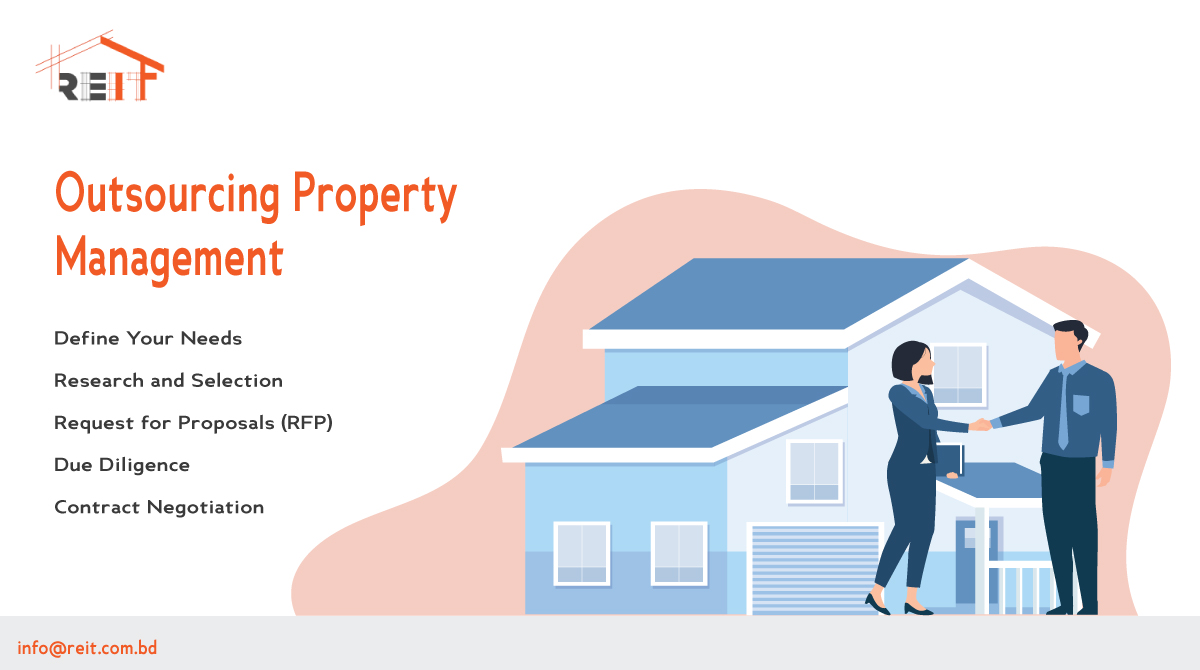
Outsourcing property management involves contracting a third-party company to handle all or specific operational duties, such as tenant screening, rent collection, maintenance coordination, and legal compliance. Property management outsourcing works by transferring the day-to-day responsibility of running the property portfolio from the owner/investor to a specialized, licensed external firm, usually under a management agreement defining scope and fees.
How is Outsourced Property Management Differentiated from In-House Operations?
The primary differentiator lies in the employment structure: In-house management uses the property owner’s or investor’s own salaried staff (employees) to perform tasks, meaning the owner bears all employment liabilities, overheads, and training costs. In contrast, outsourced management leverages the contractor’s existing infrastructure, expertise, and staff, paying a service fee (typically a percentage of gross monthly rent) without the direct employer obligations.
Why is Outsourcing Property Management Becoming More Popular?
Outsourcing is increasingly popular due to its ability to lower operational risks, enhance regulatory compliance, and provide significant time savings for property owners. Modern property management demands specialized knowledge in areas like fair housing laws, digital marketing, and property maintenance technology, which professional firms already possess. According to a 2023 industry report by the National Association of Residential Property Managers (NARPM), properties managed by certified professionals consistently report vacancy rates 10-15% lower than the national average, showcasing the effectiveness of specialized expertise.
What are the Key Advantages of Outsourcing Property Management Services?
Outsourcing provides three major strategic benefits for scaling investors: risk mitigation, cost-effectiveness, and freedom.
- Lowering Legal and Financial Risk:
- Professional firms maintain up-to-date knowledge of local, state, and federal landlord-tenant laws, dramatically reducing the risk of costly legal errors, fines, or lawsuits related to evictions or fair housing violations.
- Achieving Cost-Effectiveness through Scale:
- While outsourcing involves a fee, it often leads to overall savings. Management companies leverage their scale to secure lower rates for insurance, maintenance, and supplies from preferred vendors, passing those savings on.
- Time to Focus on Portfolio Expansion:
- Outsourcing the repetitive, time-consuming tasks (e.g., 2 AM emergency calls, quarterly inspections, chasing late rent) frees up the investor’s time. This time can then be reinvested into higher-value activities like acquiring new properties, securing financing, and long-term strategic planning.
What are the Disadvantages of Using an Outsourced Property Manager?
The primary drawback is the necessary compromise on direct, day-to-day control and potential communication friction.
- Loss of Direct Control: You hand over decisions regarding vendor selection, minor maintenance protocols, and tenant communication to a third party. If you demand complete operational oversight, outsourcing can feel restrictive.
- Potential Misalignment on Standards: The firm’s standard operating procedures might not perfectly align with your brand or specific investment goals (e.g., they might default to the cheapest maintenance option rather than the highest quality).
- Communication Delays: In a crisis, the property manager acts as a middleman, potentially slowing down critical communication between the owner, tenant, and maintenance crews.
When is Internal (In-House) Property Management the Better Choice?
Internal property management is the better choice when the investor needs absolute control over brand consistency, requires specialized expertise unique to a specific niche asset, or manages a small, highly localized portfolio. In-house staff are fully integrated into the corporate culture, ensuring every decision reflects the owner’s mission, which is crucial for high-end or specialized developments.
What are the Core Advantages of Running an In-House Property Management Team?
Keeping management in-house maximizes control and strengthens the internal corporate structure.
- Absolute Control Over Company Policy:
- You can instantly create, modify, and enforce corporate policies, communication standards, and tenant screening criteria without seeking external agreement. This ensures a consistent brand and tenant experience.
- Improved Communication and Internal Relationship Management:
- Managers who work for the company are part of the established chain of command. This allows for seamless internal communication, quicker issue escalation, and a deeper understanding of staff needs and resource allocation.
- Focused Dedication and Accountability:
- In-house managers are exclusively dedicated to your properties and investment goals. Their accountability structure is direct, making performance management and objective setting simpler than managing a vendor relationship.
What are the Challenges and Risks of In-House Property Management?
The cost and complexity of scaling an internal team often outweigh the benefits for all but the largest enterprises.
- High Capital Expenditure (CapEx): The owner must bear the full cost of salaries, benefits, employment taxes, training, software licenses, and office space—a fixed cost regardless of vacancy.
- Lack of Scalability: Expanding into a new geographic market requires hiring and training a completely new, local internal team, which is slow and costly.
- Increased Liability: As the direct employer, the property owner is entirely responsible for hiring, firing, and complying with all employment and labor laws, significantly increasing organizational risk.
- Expertise Limitations: A single in-house team may lack the deep, varied expertise (e.g., commercial leasing, short-term rentals, multi-family compliance) that a large third-party firm can offer.
Making the Right Decision: Strategic Factors to Consider
Choosing between internal and outsourced management is not a one-size-fits-all answer. The optimal strategy depends on the specifics of your portfolio.
Strategic Factor | Internal Strategy Favored | Outsourcing Strategy Favored |
Portfolio Size & Geography | Small (under 50 units); single, hyper-local location. | Large (100+ units); multiple, geographically dispersed locations. |
Required Expertise | Standard residential, where the owner is already highly experienced. | Specialized assets (e.g., student housing, commercial, industrial); complex, evolving regulatory environments. |
Cost Structure | When high vacancy rates are not a concern, and the owner has the time to manage operations. | When stability and predictable monthly costs (service fees) are paramount for budgeting. |
Investor Time | The investor has significant time (20+ hours per week) and operational skill to dedicate to management tasks. | The investor is seeking passive income and needs to maximize time for business development or other ventures. |
A hybrid model is also a viable strategy, where core strategic functions (e.g., finance, asset management) remain internal, while high-volume operational tasks (e.g., maintenance coordination, showing vacant units) are selectively outsourced to local vendors or specialized firms.
FAQs Common Property Management
The most difficult task property managers face is finding and retaining reliable, high-quality tenants, followed closely by navigating the growing complexity of legal compliance (especially concerning tenant rights and eviction moratoriums in local jurisdictions).
Outsourcing costs typically range from 8% to 12% of the gross monthly rent collected, plus potential additional fees for services like tenant placement (often one month’s rent), lease renewal fees, and major maintenance coordination. Costs are higher for smaller, older, or more specialized properties.
While real estate investment carries inherent risks, the decision between internal and outsourced management significantly affects operational risk. Outsourcing generally lowers operational risk by transferring liability for compliance errors to a professional firm, provided the firm is vetted, insured, and reputable. Internal management, by contrast, concentrates the liability onto the property owner.